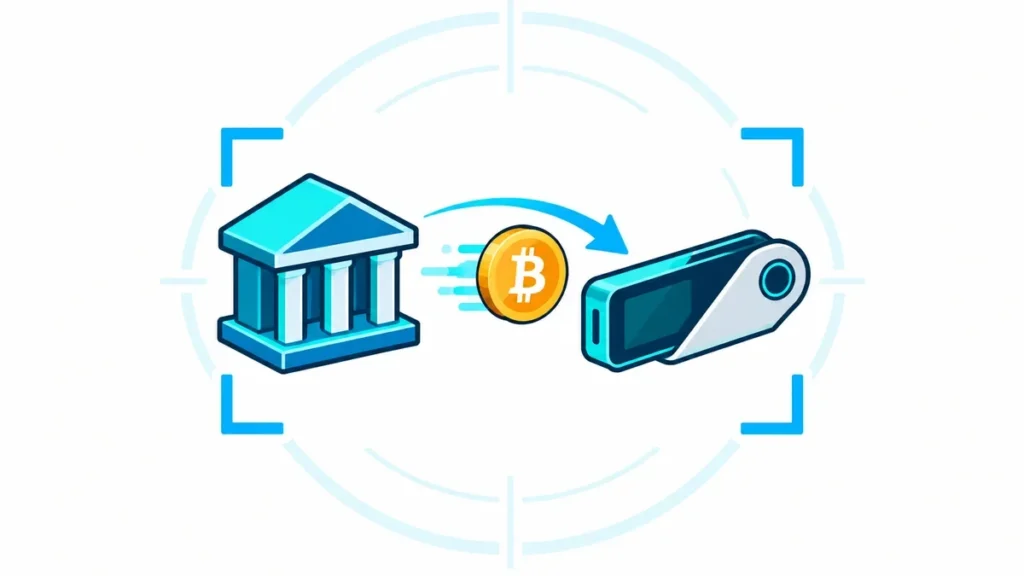
To move bitcoin from an exchange to your own wallet, generate a receive address in the wallet, check it on the device screen, paste it into the exchange’s withdrawal form on the bitcoin network, and send a small test first. Once the test confirms, send the rest to the same address. The whole procedure takes under an hour.
The withdrawal is where self-custody stops being theory: coins leave the exchange’s ledger, land on the blockchain under your keys, and from that block forward no company’s solvency is your problem. It is also the step people fear most, because bitcoin transactions are irreversible and the internet is full of stories about coins sent into the void. The fear is manageable with a procedure, and this guide is that procedure, step by step, including the two habits, device-screen verification and the test transaction, that make the irreversibility a non-issue.
Assumed in place: a wallet set up and backup-tested per How to Set Up a Bitcoin Wallet, and coins on an exchange per How to Buy Bitcoin.
Step 1: Generate a receive address in your wallet
In your wallet app, choose receive, and it displays an address, a string starting with bc1 in the modern formats, with a QR code. Two notes that prevent confusion later. Addresses are single-use by convention: the wallet generates a fresh one for each deposit, all controlled by the same seed, and old addresses keep working; the rotation is for privacy. And the address must be verified on the hardware device’s own screen, not only the computer: clipboard malware that swaps copied addresses for an attacker’s is one of the most common real-world thefts, and the device screen is the check it cannot beat.
Step 2: The withdrawal form, and the test transaction
On the exchange: withdraw, bitcoin, paste the address. Select the bitcoin network, on-chain, if asked; never a lookalike network an exchange may also offer for other assets. Then the habit that defines careful operators: send a small test first, $20-50 worth. Yes, it costs one extra network fee, typically under a dollar to a few dollars in 2026 conditions, per Bitcoin Fees Explained; it is the cheapest insurance against every address-entry failure mode at once. Verify the pasted address against the wallet, first characters, last characters, and a run in the middle, confirm, and complete the exchange’s security checks (2FA, email confirmation; some venues hold first withdrawals to new addresses for up to 24-72 hours, a normal anti-theft measure).
Step 3: Confirm arrival, then send the rest
The test appears in your wallet within minutes as an unconfirmed transaction, then gains confirmations as blocks bury it, the mechanics from What Is Blockchain?. One confirmation is arrival; the customary six (about an hour) is settled-beyond-argument; for a self-transfer, seeing it confirm at all is the point. Any block explorer, mempool.space is the usual reference, shows the transaction’s status by pasting the address or transaction ID.
Test arrived, balance correct: now send the real amount to the same verified address, repeating the same checks. For large balances, nothing requires one transaction; two or three tranches cost a few dollars more and cap the blast radius of any single mistake.
What can actually go wrong, and what cannot
Honest failure-mode list. A mistyped or malware-swapped address sends coins to a stranger or the void, irreversibly; the device-screen check and test transaction exist precisely for this, and the checksum in modern address formats makes a random typo overwhelmingly likely to be rejected outright rather than misdelivered. Choosing a wrong network on the exchange strands or loses value; selecting plain bitcoin on-chain avoids it. A withdrawal to your own, verified address arriving slowly is fee weather, not loss, covered in the fees guide. What cannot go wrong: a correctly addressed, confirmed bitcoin transaction does not bounce, expire or get reversed, and coins in a wallet whose seed only you hold cannot be frozen or confiscated by any exchange failure, the entire argument of What Is Self Custody?.
Tax note, briefly: moving coins between your own accounts and wallets is not a disposal in most jurisdictions, including the US, but keep the records; exchanges report, and your cost-basis paper trail should survive the move, the record-keeping point from the buying guide.
The checklist, condensed
Fresh receive address from your wallet; address verified on the device screen; network: bitcoin on-chain; small test sent; test confirmed in the wallet; real amount to the same address; records exported. Seven lines, and the irreversible step becomes routine.
Frequently asked questions
How long does a bitcoin withdrawal take?
Two clocks run in sequence. The exchange’s own processing takes minutes at most venues, and longer for a first withdrawal to a new address while anti-theft holds apply. Then the network: the first confirmation usually arrives within ten to twenty minutes, depending on the fee and on how busy blocks are.
Can I cancel a bitcoin withdrawal after sending it?
No. Once the exchange broadcasts the transaction, it is out of your hands and out of theirs, and once confirmed it is final. The protection lives before the click: the address checked on the device screen, the right network selected, and a small test that proves the route works.
Does the address format matter?
Modern addresses starting with bc1 are accepted by the large exchanges and are cheaper to spend from later. If an older platform rejects one, ask your wallet for another format instead of switching wallets: every format holds the same bitcoin and is controlled by the same seed.
What to watch next
Withdrawal friction keeps falling, fees in ordinary 2026 conditions are low, exchange flows are smoother than the folklore remembers, and wallet software keeps adding guardrails. The flow of coins from venues to held wallets is visible in aggregate on-chain, tracked in Exchange Reserves, and every holder who runs this checklist becomes one small data point in that series. The procedure above does not change with market weather; run it once with pocket change and it stays yours.
Every figure here is dated October 2026 unless stated otherwise. Prices and network data move daily; the sources below carry the current numbers.
Sources
- Bitcoin Improvement Proposals, BIP 173: Base32 address format for native v0-16 witness outputs, 2017.
- Taxpayer Advocate Service (IRS), Wait, when did this virtual currency question appear on my 1040 tax form?, 2021.